How is Pantarei different from other types of bodywork?
Last November I graduated from a training program most people probably haven't heard of — the Pantarei Approach.
I found it by something close to accident. I'd been working with a somatic coach for years and knew early on that this was the work I wanted to do myself. My coach didn't follow a specific approach, so I kept searching for a modality to train in. I wanted something that combined dialogue, touch, and breath. Then at a workshop in Berlin I met my first Pantarei practitioner. I didn't know anything about it yet, but I had an immediate gut feeling I needed to try this approach.
So what actually makes it different?
Most bodywork sits somewhere on a spectrum between the purely physical and the purely energetic. Massage works with muscle and tissue, with the practitioner directing the session toward specific physical outcomes. Energy-based modalities like reiki work with the body's field without direct structural manipulation. Talk-based therapy works entirely through language. The Pantarei Approach works across both registers, treating language and physical sensation as continuous rather than separate.
A session begins in conversation. You bring what's present: a situation you're working through, something that keeps surfacing, an area of life where you've been seeking deeper insight. The dialogue is the first part of the session itself, and what comes up there shapes where the bodywork goes. When we speak about our lives and name certain experiences, there's sometimes an intensity or sense of weight to what's being said, something that strikes a chord. Those moments of resonance are what the bodywork then moves toward.
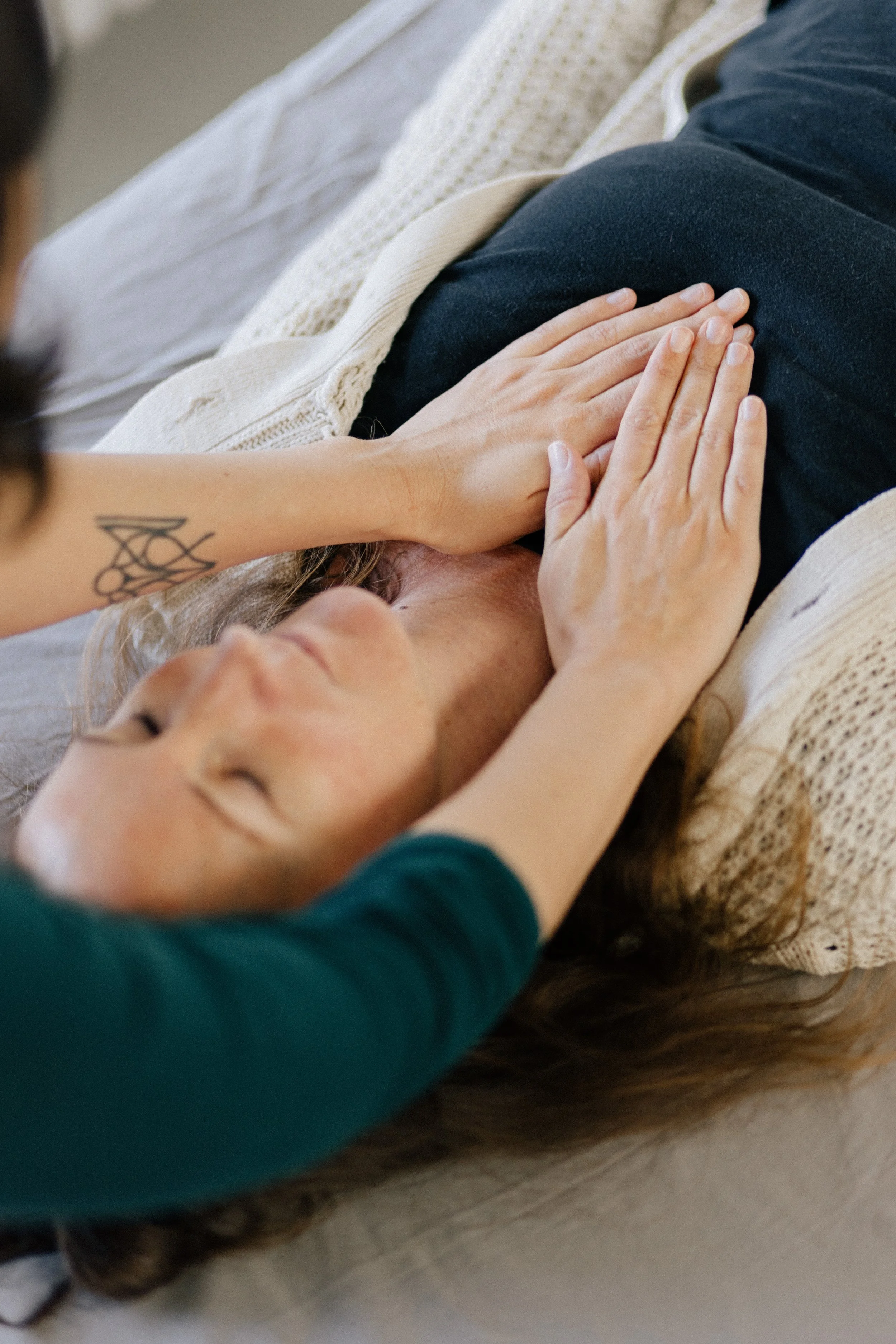
From the conversation, you move to a table. Touch works here as a tool for directing awareness. When a practitioner places their hands on a client's shoulders or chest, attention is drawn into that part of the body. You stay in the process, naming what's coming up as your body responds to touch, as emotions, images, or memories surface. You remain an active agent in your own experience throughout.
This is where Pantarei diverges most clearly from massage or reiki. In those modalities, the practitioner's expertise is largely directive. In Pantarei, the client's own awareness is the primary instrument. The practitioner listens and follows as much as leads.
It's also an approach rather than a fixed methodology, which means it's flexible enough to incorporate other techniques. Breath work, parts work, and meditation are things I draw on regularly depending on what someone needs.
Pantarei tends to be useful for people who feel like they've done a lot of cognitive processing but something still isn't shifting, or people who sense there's more going on in their body than they currently have access to. It complements therapy and medical care and can reach things that talk alone doesn't reach.
Presence is a core part of the work for me as a practitioner. When I place my hands on someone's shoulders or chest, the question I'm asking myself is whether I actually feel this person right now.
Two years of training, and that question is still what orients me. If you're curious what a session looks like or want to explore whether this work might be right for you, you're welcome to reach out or book a session.